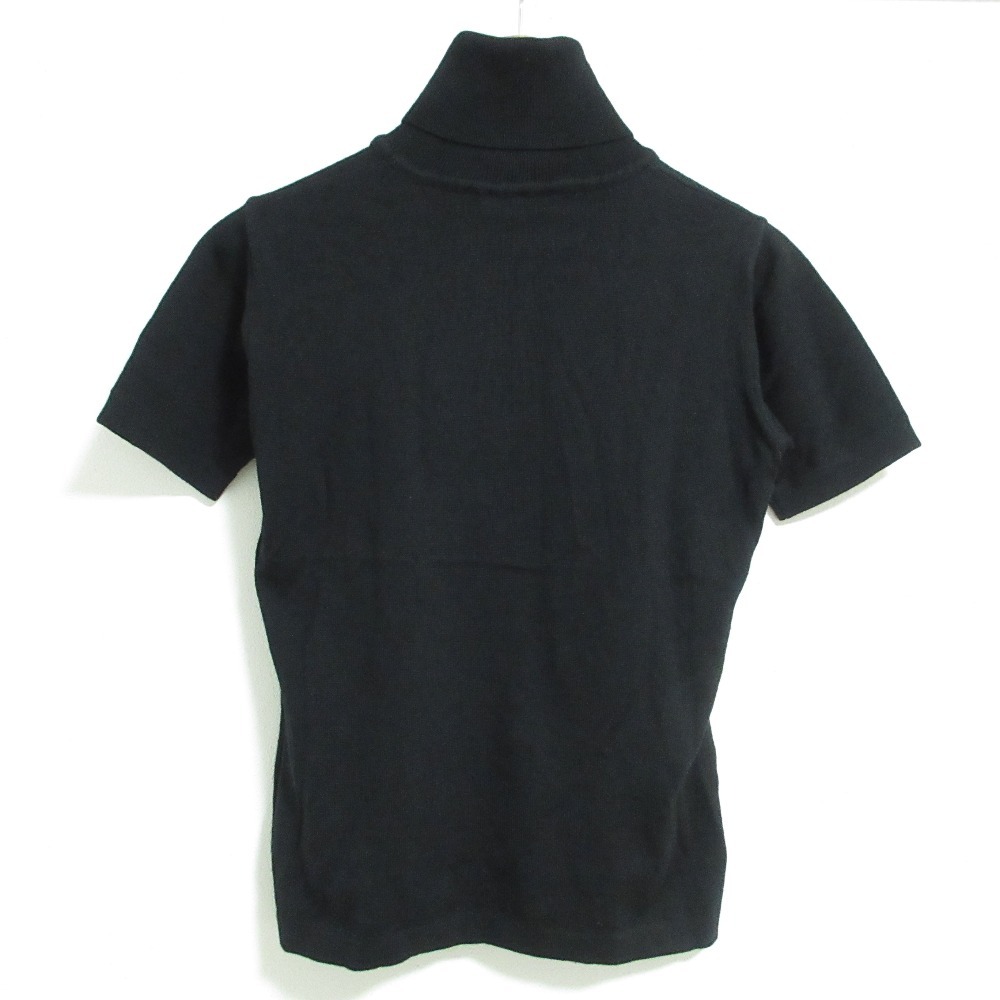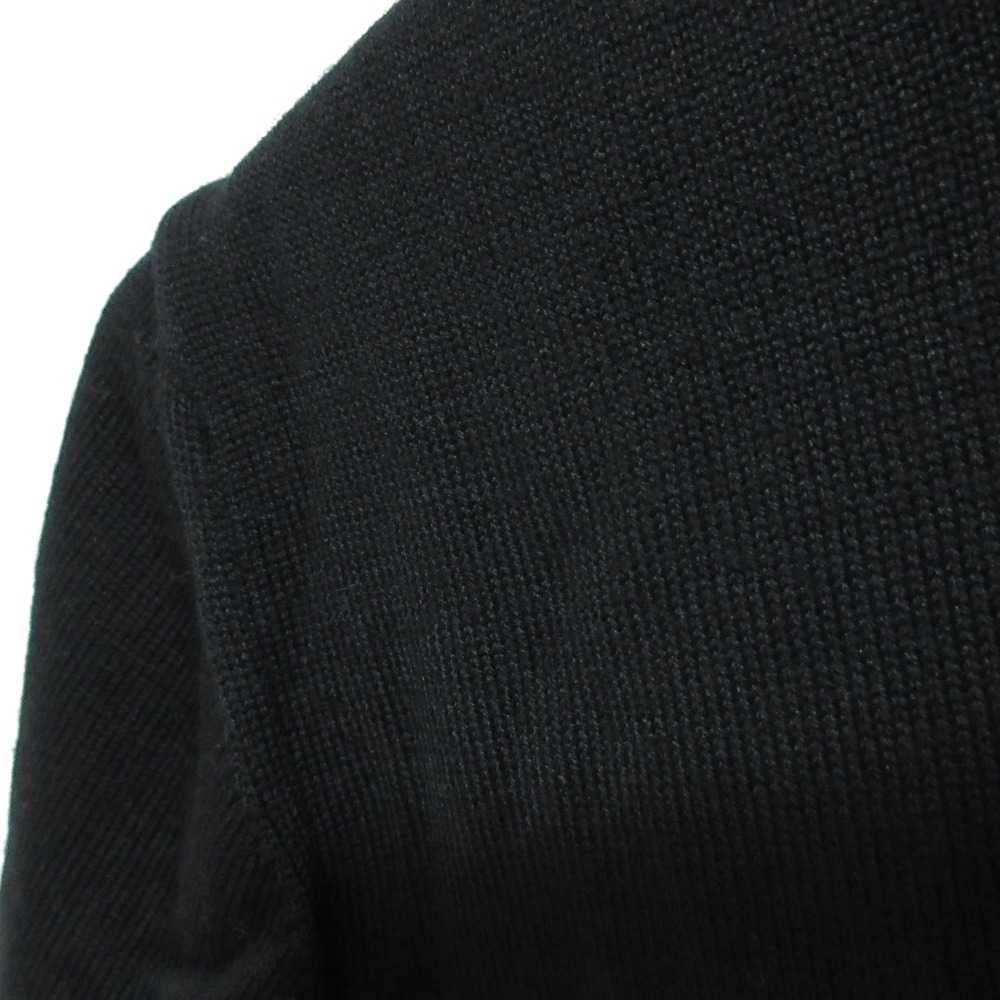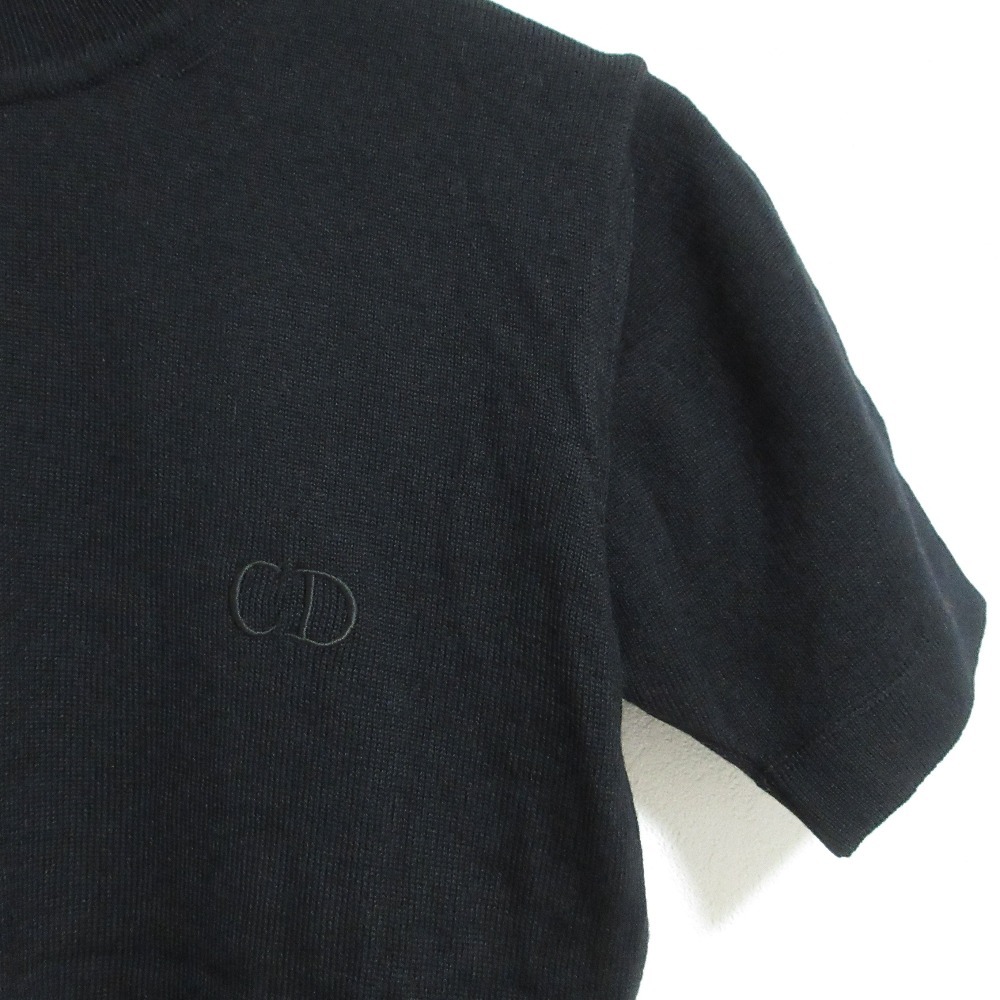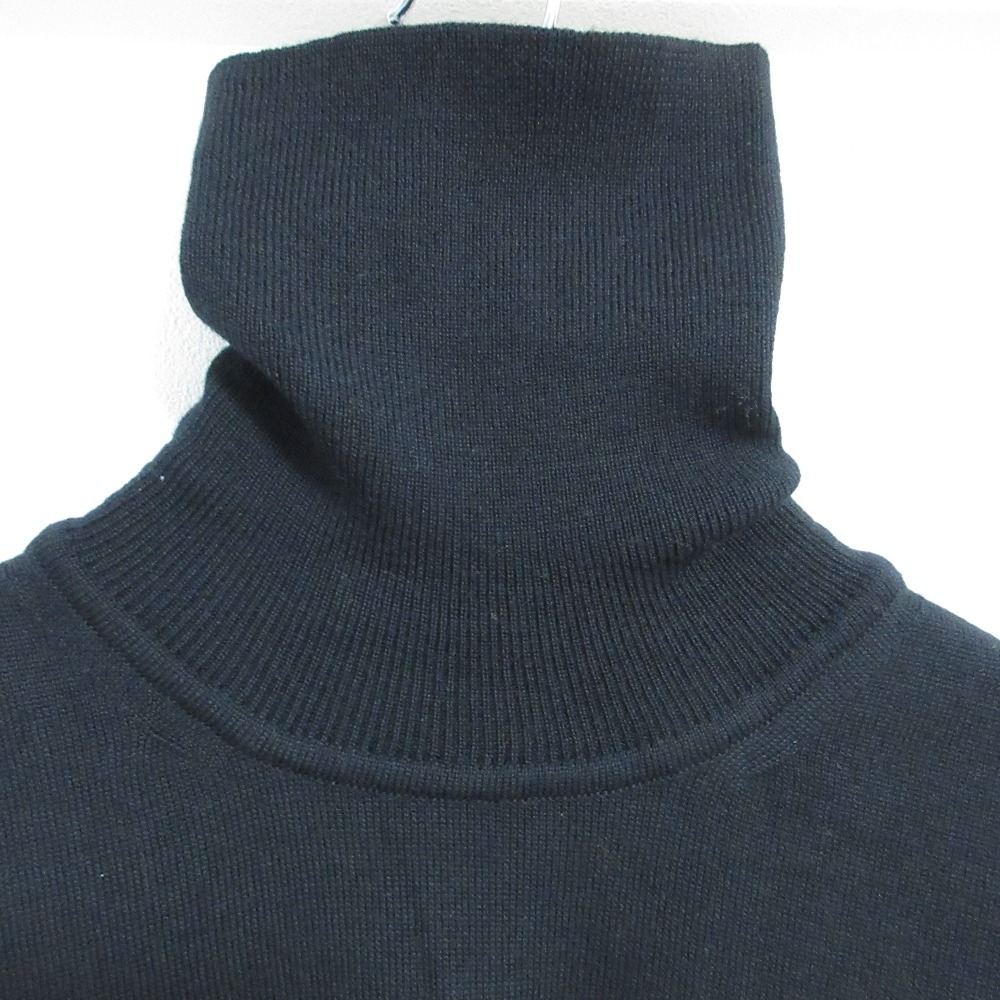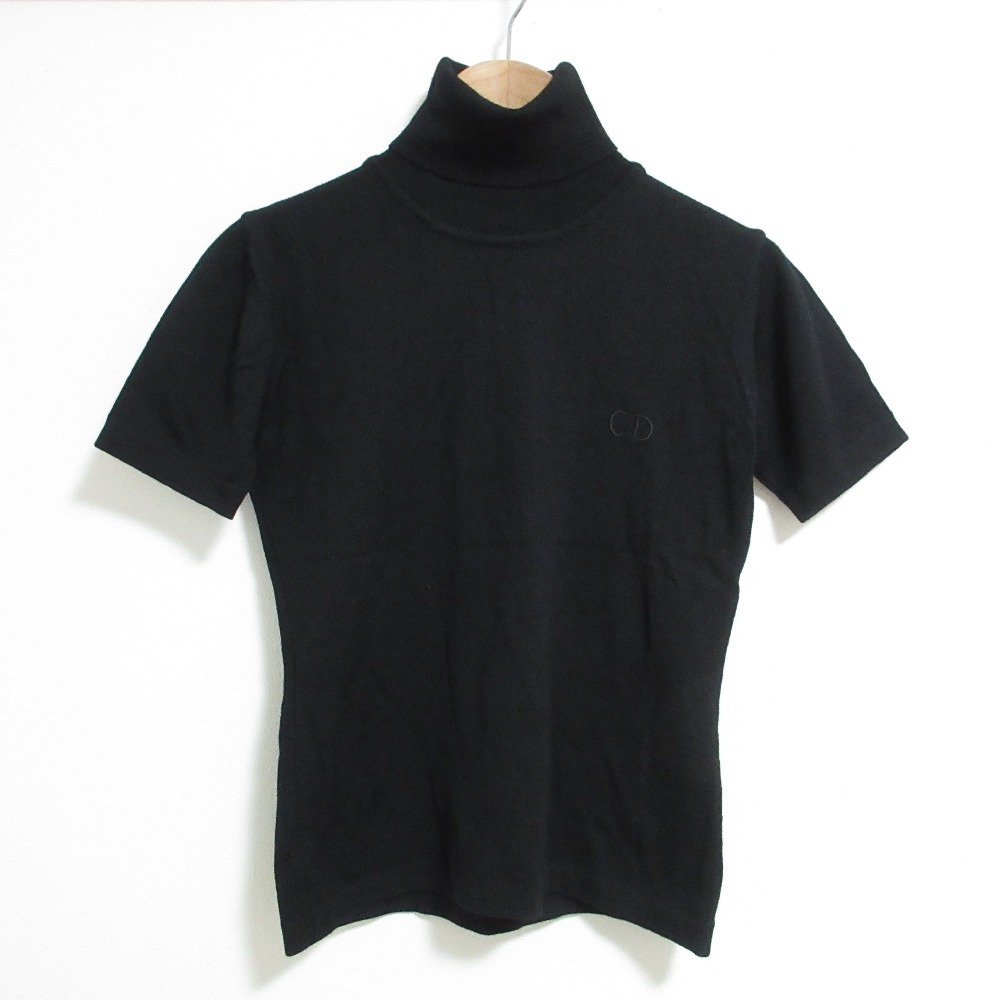
This vintage Christian Dior black wool short-sleeve turtleneck knit sweater is a women's size M, featuring an embroidered CD logo. The piece has a fitted silhouette with a high turtleneck collar and short sleeves, typical of 1980s–1990s knitwear. The merino wool fabric retains its shape and texture, showing minimal signs of wear, consistent with its excellent used condition.
The embroidered CD logo is positioned subtly on the chest, a hallmark of Dior's branding during this era. The ribbed knit construction at the collar and sleeves adds structure, while the overall simplicity of the design underscores its versatility. The absence of pilling or stretching indicates careful preservation.
The sweater's design reflects Dior's understated elegance during the Marc Bohan and Gianfranco Ferré eras, where knitwear balanced sophistication with wearability. The high turtleneck and short sleeves create a refined yet practical silhouette, ideal for layering or standalone wear. The absence of excessive detailing aligns with the house's focus on clean lines and timeless appeal.
The embroidered CD logo, though small, is a deliberate nod to Dior's legacy, blending subtle branding with the piece's minimalist aesthetic. This approach contrasts with later theatrical designs under Galliano, instead favoring a quieter confidence that defined Dior's ready-to-wear in the late 20th century.
This piece likely dates to the 1980s–1990s, a transitional period for Dior under Marc Bohan and later Gianfranco Ferré. Bohan's tenure emphasized wearable luxury, while Ferré introduced architectural influences, though this sweater retains a classic simplicity. The era saw knitwear become a staple of high fashion, with Dior refining its approach to everyday elegance.
The design reflects broader trends of the time, where minimalist branding and versatile silhouettes gained prominence. Compared to the theatrical excess of the Galliano years or the minimalist rigor of Simons, this piece represents Dior's commitment to understated, enduring style—a bridge between the house's mid-century grandeur and its later experimental phases.